
Paper’s Evolving Role in American Life
Paper Is Woven into America’s Past and Essential to Its Future
Paper has played a steady role in American life. Americans used it to record early democratic ideas, and today it supports essential products people use every day. For 250 years, the U.S. paper industry has adapted to meet the nation’s changing needs.
Paper Helped Build American Independence
In America’s early years, access to paper directly shaped economic opportunity and self-governance. Paper made it possible for colonists to trade, keep records, educate communities and exchange ideas across the colonies.
British leaders recognized paper’s importance. Through the Stamp Act, they tried to limit printing and impose taxes on paper goods. These actions showed how central paper had become to daily life.
When Britain restricted access to paper, the effects stretched far beyond printing presses. Legal records, newspapers and even playing cards felt the impact.
As Americans pushed back against those limits, paper became part of a broader move toward self‑reliance. Paper production:
- Supported a growing industry
- Strengthened local commerce
- Helped fuel public debate
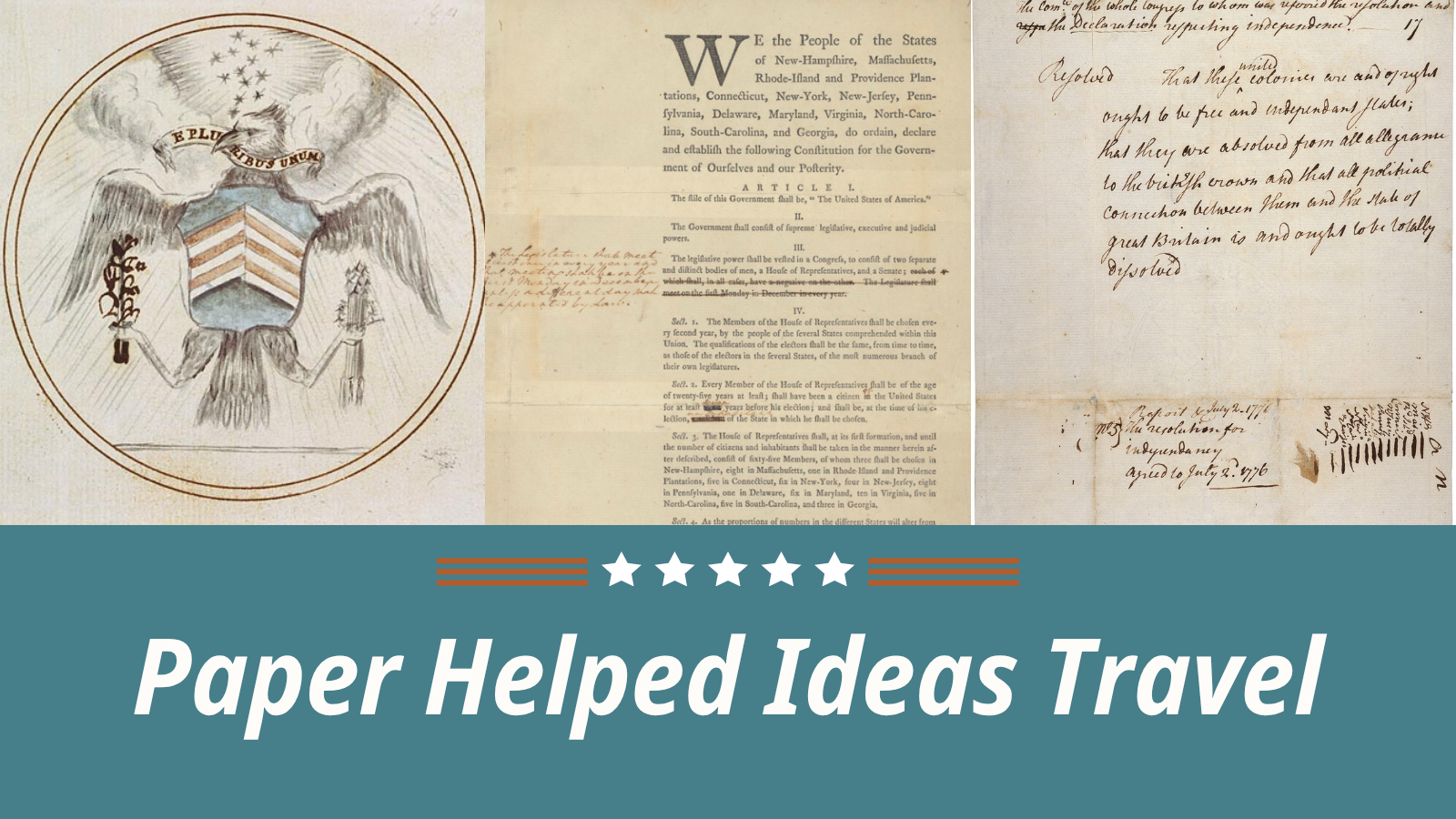
A draft of the U.S. Great Seal; George Washington's annotated U.S. Constitution; and the Lee Resolution.
Source: National Archives
These practical needs helped shape early arguments about representation and self‑government.
Pamphlets, newspapers and letters carried revolutionary ideas across the colonies. Those ideas shaped the fight for independence and influenced early drafts of the nation’s founding documents.
Printers published the Federalist Papers in newspapers. Writers drafted and revised early versions of the Constitution on paper. These documents helped Americans:
- Share ideas
- debate their meaning
- Build a new nation
Paper didn’t just help record America’s greatest moments. It helped make American independence possible.
An Industry Embedded in the American Way of Life

In 1690, the first paper mill in the United States opened, supporting early communities and local economies. From the start, paper mills provided steady jobs and served as anchors for towns where people lived and worked.
Part of the reason paper mills have remained important to so many American communities is that this industry has continued to evolve alongside changing needs.
Innovation did not replace paper. It expanded what our industry can do.
Today, boxes carry online purchases across the country. Diapers and medical papers support health and caregiving. Paper cups make it easier to enjoy coffee or tea on the go. Pizza boxes show up in many households on Friday night. Paper towels and facial tissues help reduce the spread of germs.
Paper manufacturing remains part of everyday American life. Using modern technology, the industry produces essential products that support households, schools, hospitals and businesses. While products have changed over time, paper’s role in American life has remained constant.
The Paper Industry Is Built to Meet What Comes Next
Our industry celebrates a proud history. And, it remains a vital part of how America works today.
At 250 years, as we celebrate America’s past, let’s celebrate the enduring role of the paper industry in strengthening our country's future.