
How Wood Chips Become Paper
Key Takeaways
The kraft pulping process uses 3 main chemical liquids called liquors — white, black and green — to turn wood chips into pulp.
The kraft process separates wood fibers from lignin, the natural glue that holds wood together, minimizing damage to the fibers. The liquors work in a closed loop, and more than 90% of the chemicals are recovered and reused.
Kraft Pulping Process Explained
The chemical pulping process is commonly referred to as kraft pulping. In kraft pulp mills, the word “kraft” means strength, and "liquor" refers to the chemical liquids used to:
- Turn wood chips into pulp
- Recover and reuse the pulping chemicals
The 3 main liquors are:
- White liquor dissolves non-fibrous parts of the wood chips
- Black liquor carries away the dissolved wood material and used chemicals
- Green liquor is the chemical recovery step that helps regenerate fresh white liquor
The liquors work in a closed loop. More than 90% of these chemicals are reused.
Why the Kraft Pulping Process Is Needed
The kraft pulping process is essential because it's proven to be the most effective and efficient large-scale way to separate wood fibers from lignin. It preserves the strength needed to make everyday products, and enables the chemicals to be reused over and over again.
Wood fibers are held together by lignin, a natural glue-like material. The chemicals used in the kraft process loosen that bond so the useful wood fibers can be separated from the lignin without damaging them.
The process also keeps wood fibers long and strong. That is important when manufacturing products like cardboard boxes, paper towels, paper bags, paper cups, printer paper and more.
Papermaking “Liquors” Defined
Click on the name of each type of liquor to learn what the liquor is and what it does.
What White Liquor Is
A strong alkaline cooking liquid made mainly of sodium hydroxide and sodium sulfide.
What White Liquor Does
Used to “cook” the wood chips. Breaks down lignin—the natural glue –and separates it from the useful wood fibers.
What Black Liquor Is
The liquid leftover after cooking the chips. It contains dissolved wood material, especially lignin, along with the used pulping chemicals.
What Black Liquor Does
It is concentrated and burned to separate the chemicals from the dissolved wood material. The dissolved wood material is burned in a recovery boiler. That produces steam and bioenergy to power the mill and can be sold to the electrical grid. The leftover chemical material is used to make green liquor.
What Green Liquor Is
A liquid made by dissolving the leftover chemical material from burned black liquor in water.
What Green Liquor Does
It is treated with lime to turn it back into white liquor, completing the chemical recovery cycle.
How the Liquor Cycle Works
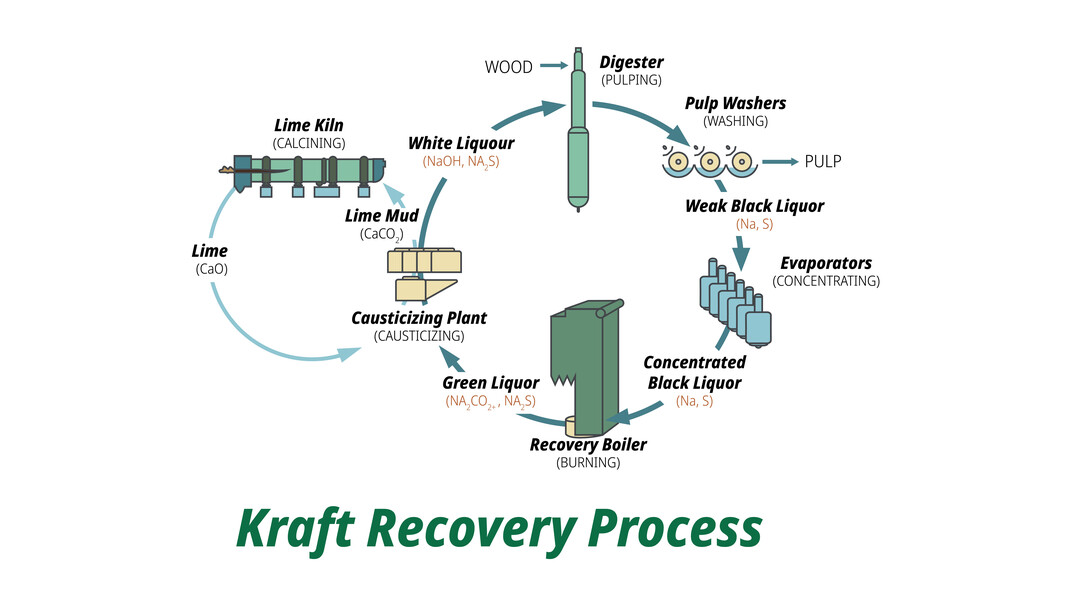
The liquor cycle is also referred to as the kraft recovery process.
1. White liquor cooks the wood chips. The chemicals in white liquor help separate the useful wood fibers from lignin.
2. Black liquor is collected after cooking. It contains the dissolved wood material, including lignin, and the pulping chemicals.
3. Black liquor is concentrated and burned to separate the chemicals from the dissolved wood material. Burning the dissolved material produces useful energy that powers the mill, while the leftover chemicals are used to make green liquor.
4. The leftover chemicals become green liquor by being dissolved in water.
5. Green liquor becomes white liquor again. The green liquor is treated with lime to regenerate white liquor, allowing the mill to reuse the chemicals.
6. The cycle repeats, allowing the mill to reuse chemicals continuously.
Why the Kraft Recovery Process Matters
The kraft recovery process is a closed-loop process and contributes to paper production circularity. White liquor starts the process. Black liquor carries away what is removed from the wood and provides energy. Green liquor is the bridge that helps make white liquor again.
This helps mills reduce waste, improve efficiency and support continuous pulp production.