
Can You Recycle Envelopes?
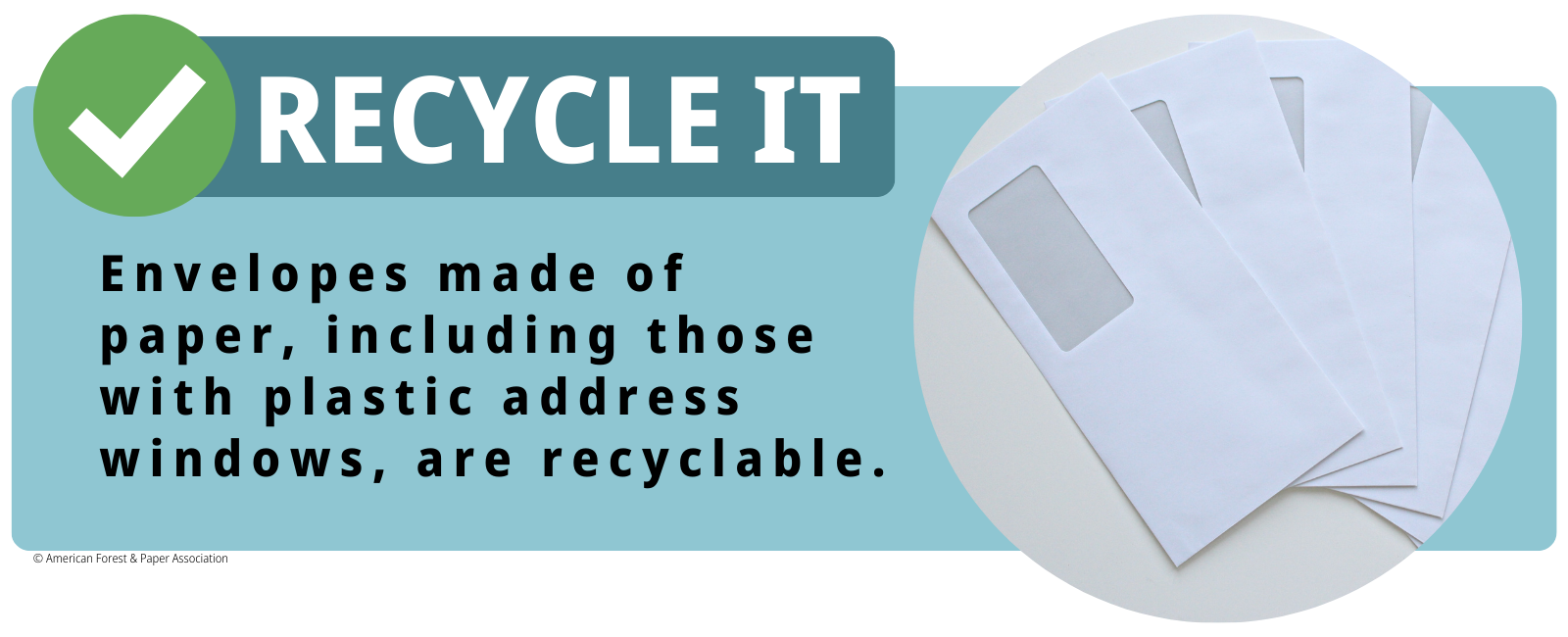
Yes! Envelopes made of paper, including those with plastic address windows, are recyclable. You do not need to remove stamps, labels, or the small plastic windows before recycling.
During the repulping process, non-paper materials such as stamps and plastic windows are filtered out.
How Do You Recycle Envelopes?
Recycling envelopes is easy. Here are a few tips to help you recycle correctly:
- Remove anything inside of the envelope.
- Toss envelopes in your recycling bin, no need to tear off stamps or windows.
Can I Recycle an Envelope with Glitter on It?
No, glitter paper cannot be recycled. Neither can envelopes made with metallic paper. Glitter cannot be separated from paper fibers during the recycling process.
Can I Recycle an Envelope If It Gets Wet?
If the envelope is a little damp from your coffee mug, that’s okay. However, if it’s soaked, check your local recycling guidelines to see if composting is an option.
Keeping paper dry and clean is important for recycling. When paper gets wet, its fibers begin to break down, making it harder to repulp and turn into new products.
What do I do if my Mail Contains Sensitive Information?
First, remove any sensitive documents from the envelope. You can recycle the envelope as usual. For the sensitive information, shred the documents and then follow your local recycling guidelines for disposing of shredded paper.