Can You Recycle Shredded Paper?
Yes, shredded paper can be recycled, but local communities typically have specific rules for accepting shredded paper. Paper mills can process shredded paper and turn it into new products.
Why Does Shredded Paper Need Special Handling?
Shredded paper is small and lightweight. This makes it harder for some recycling equipment to sort it efficiently. That’s why many communities have specific rules for how to handle it.
How Do You Recycle Shredded Paper Correctly?
Check your local recycling guidelines first to make sure you follow the correct steps.
Usually, you need to place shredded paper in a paper bag that’s stapled shut before putting it in your recycling bin. Some communities may require a special drop-off location.
You can also look to see if your community hosts special events to collect shredded paper.
Should You Shred All Paper Before Recycling?
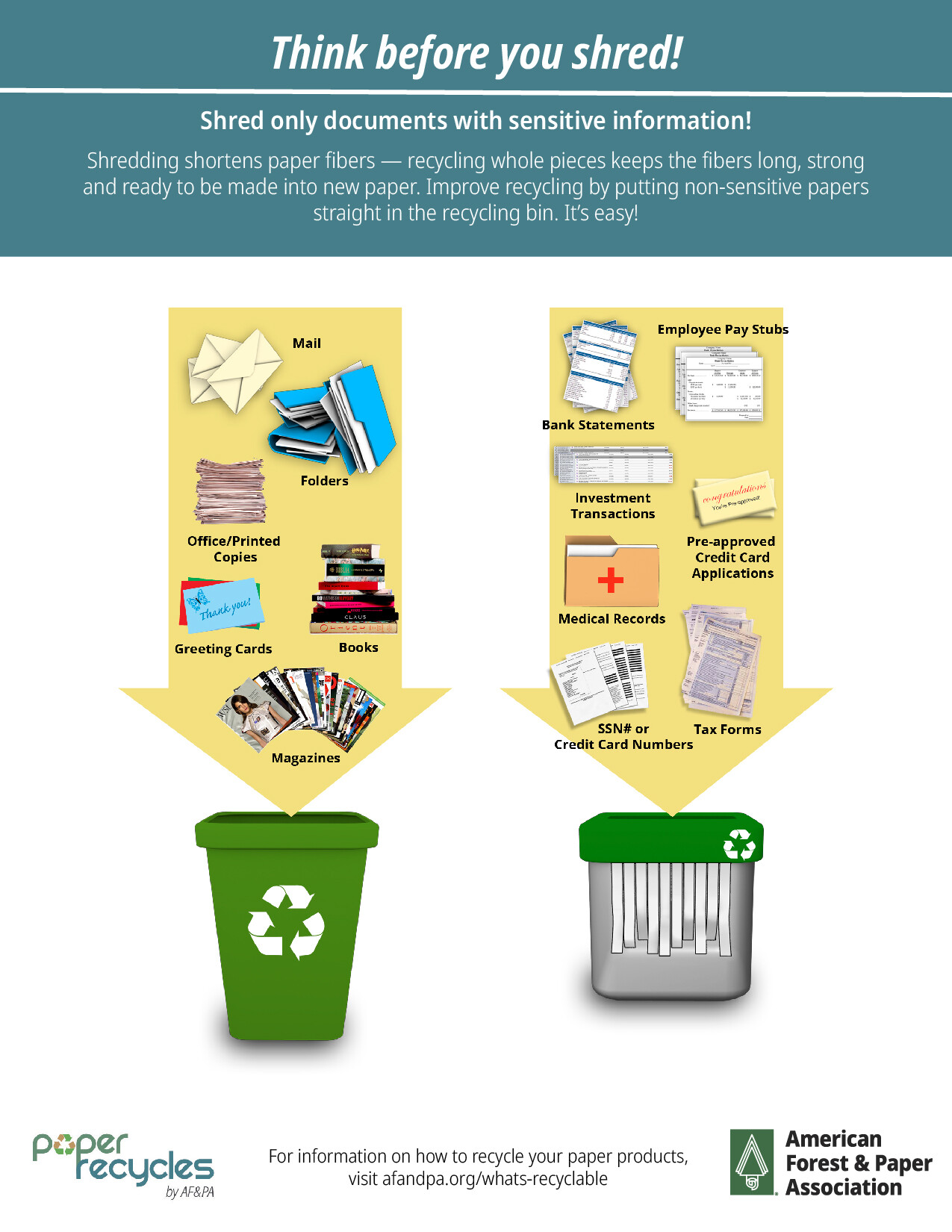
No. Only shred paper that contains sensitive information, like personal or financial details. If the paper is not sensitive, place it in your recycling bin without shredding it.
Why Shouldn’t You Shred Paper Before Recycling?
A sheet of paper is easier to sort and recycle. This helps improve the quality of recycled material and supports the recycling process. The smaller the paper is, the less likely it is to get recycled.
Want More Paper Shredding Resources?