AF&PA announced key advocacy priorities for 2024. Our policy priorities include safety, sustainability and energy and the environment. That’s in addition to several regulatory and policy challenges facing the paper and wood products industry this year.
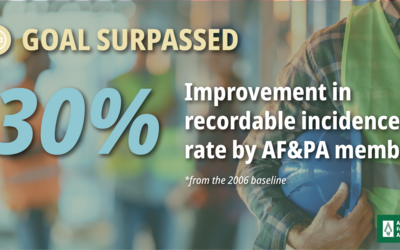
In 2020, AF&PA member companies’ recordable incidence rate was 30% lower than the 2006 baseline. This surpasses our goal to reduce the incidence rate by 25% from 2006 to 2020.
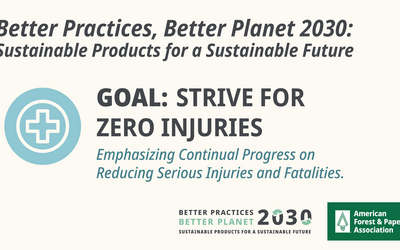
A Better Practices, Better Planet 2030 goal is to strive for zero injuries, emphasizing continual progress on reducing serious injuries and fatalities (SIFs).
Our ambitious new set of goals, Better Practices, Better Planet 2030, will further advance the role our industry plays in the circular economy and build on our achievements to improve our planet, our people and our communities.
To help further our Voluntary SIF Prevention Program’s goals, AF&PA organizes an annual safety workshop and conducts safety webinars. We've compiled the past 3 years of workshop presentations for your use. You can also:Get more information about the Voluntary SIF Prevention Program and how…
At AF&PA, safety comes first. Our Goal Zero mindset means we are always working toward zero injuries and zero incidents, across every mill and facility.One way we support that goal is by sharing real-world safety alerts from member companies. Submissions are voluntary and help strengthen safety…
The forest products industry, like others, has embraced a new paradigm to help prevent serious injuries and fatalities (SIFs) in the workplace. Safety professionals for many years acted under a paradigm based on the concept of the “Safety Triangle,” which assumed that if minor injuries at the…