
Can You Recycle Cereal Boxes?
Yes, you can recycle cereal boxes! They’re made from paperboard, which is thicker than regular paper but not as thick as the cardboard used in shipping boxes.
What Makes Cereal Boxes Recyclable?
Paperboard, also known as boxboard, is a valuable, recyclable material that can be turned into new paper products. Cereal boxes are usually accepted in curbside recycling programs. Before you toss your empty box into the bin, there are a few steps you should take.
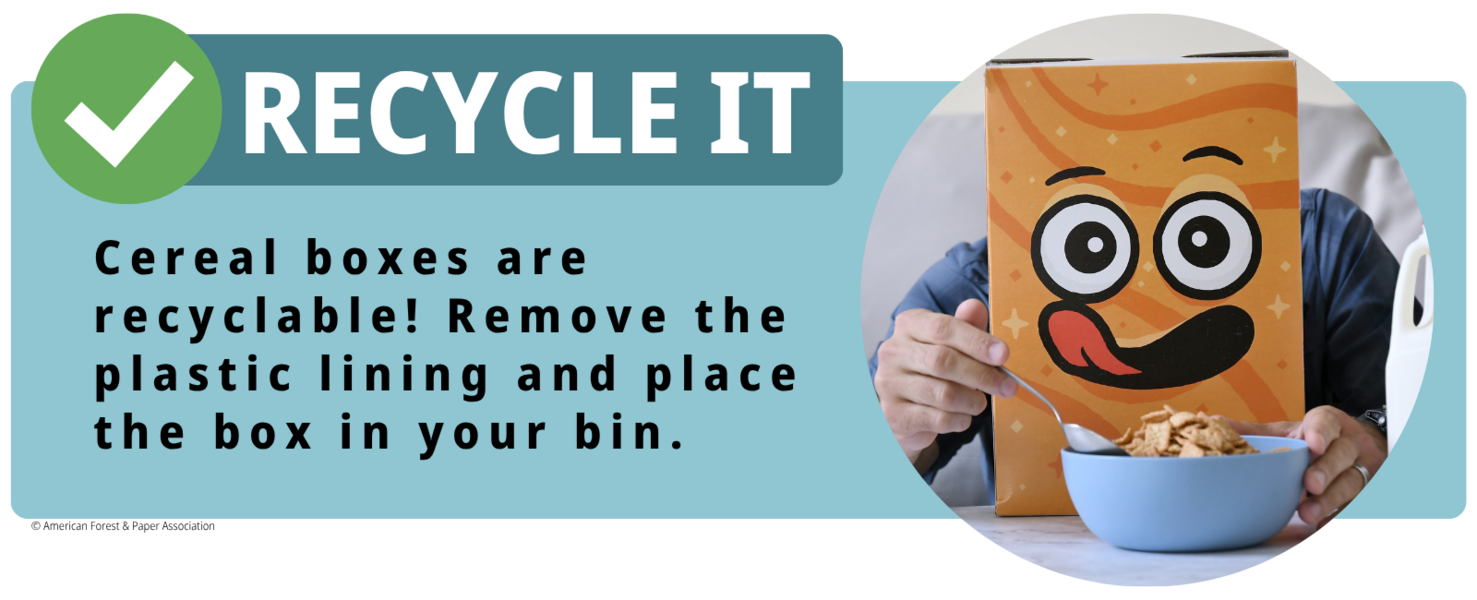
How to Recycle Cereal Boxes the Right Way
To make sure your cereal box gets recycled properly, follow these steps:
- Remove the plastic liner: The bag that holds the cereal isn’t usually recyclable curbside. Check if a local drop-off location like your grocery store takes these.
- Check for crumbs: Shake out any leftover cereal.
- Flatten the box: This helps save space in your recycling bin.
Keep your boxes dry and clean. When paper gets wet, its fibers begin to break down, making it harder to repulp and turn into new products.
Curious about what happens after you put your cereal box in the recycling bin?
What Other Paperboard Boxes Can I Recycle?
Paperboard is often used to package lightweight items, so there are a lot of boxes you can put in the recycling bin! You can recycle:
- Food packaging like pasta, cracker, candy, snack and rice boxes
- Heath and personal care boxes for toothpaste, soap, medicine, bandages and tissues
- Boxes for make-up, skincare products, hair dye and face creams
- Small electronics boxes for phones, tablets, cords and watches
There are many more things packaged using paperboard boxes. Always check your local recycling rules before recycling!